
Health Ministry Announces Mop-Up Exercise for Validation and Posting of Health Professionals
Introduction
The Ministry of Health (MoH) has launched a mop-up exercise to support the validation, profile updates, and eventual posting of health professionals as part of its ongoing nationwide recruitment drive. This initiative provides a second chance for qualified applicants who missed earlier stages or need to complete their documentation.
Announced on May 21, 2026, the exercise is a critical step in addressing staffing gaps in Ghana’s health sector while managing the high volume of applications from unemployed health professionals.
Background of the Recruitment Exercise
Ghana’s Ministry of Health received financial clearance to recruit approximately 8,000 health professionals to strengthen primary healthcare, especially in underserved areas. The main recruitment attracted over 105,000 applicants, highlighting the severe unemployment challenge among trained nurses, midwives, allied health professionals, pharmacists, and physician assistants.
So far, more than 7,200 professionals have been successfully placed. Successful candidates are expected to begin work on July 1, 2026, following district-level interviews and verification.
The mop-up exercise specifically targets those who could not complete the initial validation process and will also cover specialized institutions like teaching hospitals and psychiatric hospitals, which were partially excluded from the main exercise.
Details of the Mop-Up Exercise
According to the Ministry’s Public Relations Unit:
- Profile Update Period: May 21 – May 25, 2026 (5 days only).
- Purpose: Allow applicants to update personal profiles, including uploading passport-size photographs and other required details.
- Recruitment Application Window: Opens Wednesday, May 27 to Thursday, May 28, 2026.
Applicants are strongly advised to act quickly within these tight timelines. The Ministry emphasized that this exercise is part of efforts to streamline recruitment and ensure efficient posting of qualified personnel across the country.
Official Portal: Applicants must use the designated Ministry of Health recruitment portal for all processes.
Who Should Participate?
- Health professionals who applied in the main exercise but could not complete validation.
- Qualified applicants who missed the initial deadline.
- Those seeking placement in teaching hospitals, psychiatric hospitals, and other specialized facilities.
- Unemployed nurses, midwives, allied health workers, and related professionals with the required qualifications.
Next Steps After Mop-Up
- Profile Validation : Update and verify personal and professional details.
- District-Level Interviews & Verification : Successful candidates will report to district health directorates for document checks.
- Posting : Formal engagement and assumption of duty (targeted for July 1, 2026, for the main batch; mop-up candidates may follow shortly after).
- Further Recruitment : The Ministry expects additional financial clearance later in 2026 to recruit more professionals.
Why This Matters
This mop-up exercise is significant because:
- It helps reduce the backlog of over 105,000 unemployed health professionals.
- Supports the government’s push for free primary healthcare and improved access in rural and underserved communities.
- Strengthens Ghana’s healthcare workforce amid challenges like disease outbreaks and population growth.
- Demonstrates the Ministry’s commitment to transparency and inclusivity in public sector recruitment.
Health Ministry Opens Admissions for 2026/2027 Public Health Training Institutions
Introduction
The Ministry of Health (MoH) has officially announced the opening of admissions into various Public Health Training Institutions across Ghana for the 2026/2027 academic year. This is excellent news for aspiring nurses, midwives, public health officers, and other allied health professionals.
The online admissions portal opens on Wednesday, May 20, 2026, at 10:00 AM and closes on Friday, June 12, 2026. This window offers a structured opportunity for qualified candidates to apply for Degree, Diploma, and Certificate programmes.
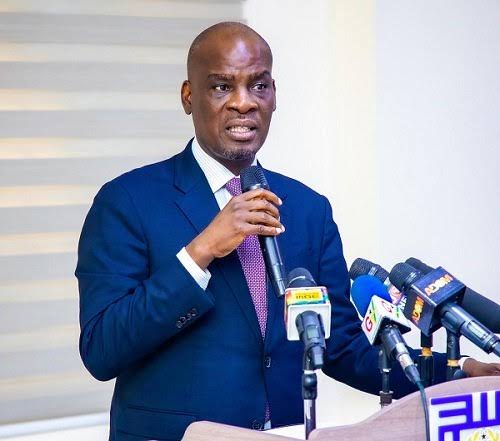
Health Minister Kwabena Mintah Akandoh emphasized the importance of these institutions in building Ghana’s healthcare workforce.
Key Details of the Admissions Process
- Application Period: May 20 – June 12, 2026 (portal opens 10:00 AM on start date).
- Application Fee: GH¢150 (payable via the official Health Training Admissions Portal).
- Voucher Validity: Until June 19, 2026 (for unused vouchers).
- Official Portal: register.healthtraining.gov.gh
How to Apply:
- Purchase an application voucher through the portal (mobile money options available).
- Receive a unique PIN and Serial Number.
- Complete the online application form accurately.
- Provide required details: Ghana Card number, active phone number, valid email address, residential address, and Ghana Post Digital Address.
Important Warnings:
- Do not use another person’s Ghana Card or email.
- All communications will be via SMS or email.
- Incomplete or inaccurate applications may lead to disqualification.
- Successful shortlisted applicants will attend a competitive interview at their chosen school.
Programmes Offered
Public Health Training Institutions offer a wide range of programmes, including:
- Nursing (General Nursing, Midwifery, Mental Health, Community Health, Public Health Nursing)
- Allied Health Programmes (Medical Laboratory, Environmental Health, Nutrition, Disease Control, Health Information Management, etc.)
- Certificate, Diploma, and some Degree programmes
These institutions train frontline healthcare workers essential for Ghana’s health system, from community-level care to specialized hospital services.
Major Public Health Training Institutions
Ghana has numerous accredited public institutions, including:
- Public Health Nurses Training School, Korle-Bu
- Community Health Nurses Training Colleges (e.g., Esiama, Winneba, Fomena)
- Various Nursing and Midwifery Training Colleges across regions (Teshie, Pantang, Ho, etc.)
- Specialized schools like Ophthalmic Nursing and others under the Ministry of Health.
Note: Always verify specific programmes and entry requirements for your preferred institution on the official portal, as offerings vary by school.
Entry Requirements (General Overview)
Requirements typically vary by programme level:
- WASSCE/SSSCE: Credit passes (A1-C6/A-D) in core subjects (English, Core Math, Integrated Science/Social Studies) plus relevant electives. Aggregates often range from 8–24 depending on the programme (science backgrounds preferred for many).
- Mature Applicants: Specific age and experience criteria may apply.
- Degree Programmes: Higher aggregates or prior qualifications.
For precise cut-offs and subject requirements, check the “View Eligibility” section on the admissions portal.
Why Pursue Training in These Institutions?
- National Impact : Contribute directly to Ghana’s healthcare delivery and Universal Health Coverage goals.
- Employment Prospects : High demand for trained health professionals; government often absorbs graduates into the Ghana Health Service.
- Affordable & Structured : Public institutions with standardized training recognized by regulatory bodies like the Nursing and Midwifery Council (NMC) and Allied Health Professions Council.
- Career Progression : Pathways to specialization, further degrees (e.g., BSc, MPH), and leadership roles in public health.
Stakeholder Perspectives and Context
This annual exercise addresses the growing need for healthcare workers amid population growth, emerging health threats (e.g., recent Ebola alerts), and efforts to strengthen primary healthcare. The Ministry continues to digitize the process for transparency and efficiency.
Prospective students are encouraged to prepare documents early and seek clarification only through official channels to avoid scams.
About The Author