

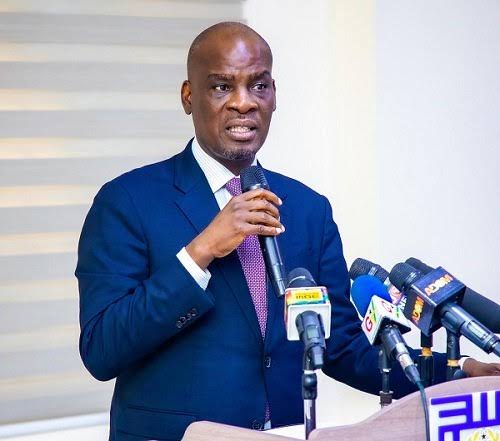
Government Finalises 20% Allowance for Teachers in Deprived Areas
In a significant move to address long-standing staffing imbalances in Ghana’s education sector, the government is finalising a 20 per cent incentive allowance for teachers serving in deprived communities. Education Minister Haruna Iddrisu announced the development in a speech delivered on his behalf at the launch of this year’s Ghana Teacher Prize awards, organised by the National Teaching Council (NTC).
The allowance is designed to attract, motivate and retain qualified teachers in hard-to-reach and underserved areas while compensating them for the difficult living and working conditions they face. It forms part of a broader package of welfare measures under the Mahama administration aimed at strengthening teacher deployment and improving learning outcomes nationwide.
The Announcement and Broader Context
Speaking at the event, the Minister emphasised that the incentive targets teachers in communities lacking basic amenities such as reliable electricity, potable water and adequate social infrastructure. He linked the policy to the government’s Teacher Housing Initiative (also known as Teacher Dabre), which seeks to provide accommodation for educators in rural and deprived areas.
The Ghana Teacher Prize awards, scheduled for October in Accra, carry the theme “Empowering Teachers: Architects of the Future.” Iddrisu described teachers as essential partners in national development and “architects of the future,” stressing that no education reform or curriculum can succeed without motivated, well-trained and adequately supported educators. He noted that teachers shape the human capital needed for progress in medicine, engineering, governance, industry and the arts far beyond preparing students for examinations.

This announcement builds on earlier commitments. President John Dramani Mahama first flagged the 20% allowance during his 2025 State of the Nation Address as a way to motivate teachers and improve rural education. In early 2026, the Ministry of Education released a detailed list of “deprived districts” eligible for the benefit. Entire regions such as North East, Savannah and Oti received blanket classification, while specific districts in Ashanti, Bono, Eastern, Western, Northern and other regions were also included (with limited exceptions for major urban centres like Tamale, Bolgatanga and Wa).
Deputy Education Minister Clement Apaak had previously confirmed the policy under the Teacher Dabre programme, noting that the allowance would be added to teachers’ gross salaries and paired with accommodation support.
Complementary Welfare Measures
Iddrisu outlined several related interventions already underway or being finalised:
- Processing of more than 30,000 diploma teachers onto the appropriate salary structure.
- Reduction of the waiting period for study leave with pay for teachers in deprived areas (from four years to two years, according to the latest announcement; earlier parliamentary statements had referenced a reduction from three years).
- Allocation of resources for teacher training allowances.
- Expansion of the National Teaching Council’s regional offices to bring licensing and professional support closer to teachers on the ground.
- Ongoing work with the NTC, Ghana Education Service (GES) and other stakeholders to strengthen teacher licensing, continuous professional development and conditions of service.
The Minister acknowledged remaining challenges around conditions of service but reaffirmed the government’s firm commitment: “The direction is clear and the commitment is firm. This government will continue to invest in the people who teach our children.” He called on Ghanaians to recognise teachers’ contributions and create an enabling environment for them to perform effectively.
A speech delivered on behalf of Professor Ernest Kofi Davis, Director-General of the GES, commended partners supporting the awards and urged teachers to uphold professional dignity, pursue continuous development, remain innovative and prioritise learners’ welfare. Meanwhile, Prosper Tachie, President of the Ghana National Association of Teachers (GNAT), used the platform to call for faster resolution of promotion delays and other outstanding interventions affecting educators.
The Teacher Dabre Initiative and Housing Component
The 20% allowance sits within the larger Teacher Dabre framework (“Dabre” roughly translates as “resting place” in Twi). Beyond the salary top-up, the government has announced plans to construct tens of thousands of housing units for teachers, prioritising rural postings. Earlier in 2026, GH¢500 million was allocated in the budget to launch the Teachers’ Housing Scheme, with intentions to scale funding further. Implementation is expected to involve the District Assemblies Common Fund, partnerships with teacher unions and other stakeholders, and a decentralised approach.
The combined financial and housing incentives aim to reverse the chronic preference of many teachers for urban postings, which has left many rural schools understaffed.
Union Pressure and Implementation Timeline
The timing of the “finalising” announcement is notable. Teacher unions, including the Pre-Tertiary Teachers Association of Ghana (PRETAG), had issued ultimatums demanding implementation of the 20% deprived-area allowance by the end of August 2026, warning of possible industrial action. Unions have also pressed for related issues such as promotion structures (including movement from Deputy Director ranks) and other allowances. Earlier in the year, some unions expressed disappointment that the mid-year budget review did not explicitly prioritise the allowance.
Government officials have repeatedly stated that the Ministry of Finance, GES and Ministry of Education are working on the rollout. The latest statement signals progress toward operationalising the long-promised incentive.
About The Author