
Payment of Teachers’ Arrears: Government Targets October 16 for First Tranche
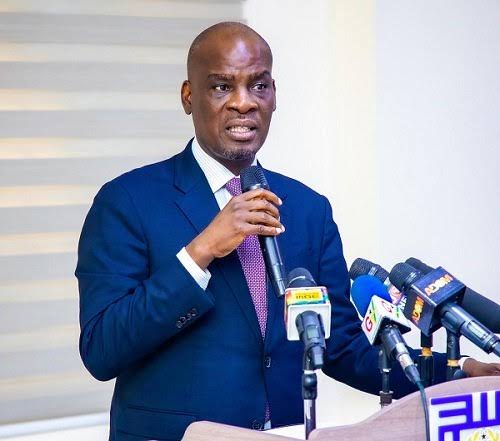
In a significant move to ease industrial tensions in Ghana’s education sector, the government has set October 16, 2026, as the target date for disbursing the first tranche of outstanding promotion-related salary arrears to eligible teachers. Education Minister Haruna Iddrisu made the announcement after personally monitoring the validation of promotion records at a data processing centre in Accra.
The development follows the Ghana Education Service (GES) completing validation of at least 51,000 promotion records and submitting them to the Controller and Accountant-General’s Department (CAGD) by the 4 p.m. deadline on October 5, 2026. These teachers promoted but yet to receive corresponding salary upgrades and arrears form the initial batch of a larger group estimated at around 80,000 beneficiaries.
Background to the Arrears Dispute
Promoted teachers across pre-tertiary institutions have long waited for their new salary grades to take effect, with arrears in many cases tracing back to early 2026 (and in some reports referenced more broadly). The delay stemmed largely from data transfer and validation challenges between the GES and CAGD. Unions including the Ghana National Association of Teachers (GNAT), National Association of Graduate Teachers (NAGRAT), and Pre-Tertiary Education Teachers Association of Ghana (PRETAG) cited this, alongside demands for a new collective agreement on conditions of service and a proposed 20% deprived-area allowance, as key reasons for a nationwide strike that began in late September 2026 and disrupted teaching and learning in public schools.
Earlier assurances had indicated that upgraded salaries would begin reflecting in payrolls around September/October, with arrears to follow. By early October, the government escalated efforts: directing rapid validation of the bulk of records and committing to supplementary payments for the first group while folding remaining adjustments into regular October salaries or completing them by month-end.
The Minister’s Commitment and Timeline
During his Sunday, October 4 visit to the validation centre, Mr. Iddrisu stressed the need for speed and accuracy. He directed that at least 51,000 (with some references aiming toward 52,000) records be ready for processing so the Ministry of Finance could arrange a supplementary intervention. The first tranche is scheduled for payment on or before October 16 via this supplementary route. The remaining teachers among the approximately 80,000 are to have their arrears and grade placements addressed by the end of October specifically by October 30.
At the 2026 Teacher Prize ceremony and related engagements, the Minister reinforced the pledge in strong terms: government accepts its responsibility as employer and will honour the obligations. He stated that failing to clear the promotion arrears by October 30 would be “inexcusable” and that he would “have no honour” if the deadline is missed, standing in on behalf of the President. He also renewed appeals for striking teachers to return to classrooms while negotiations continue, describing educators as “architects of the future” whose difficult working conditions the government is working to improve.
Parallel discussions cover the other union priorities. A committee involving teacher-union representatives and the Ghana Statistical Service is validating eligibility for the 20% deprived-area allowance (a manifesto commitment), accounting for possible teacher transfers. The Fair Wages and Salaries Commission, supported by the Finance Ministry, is engaging unions on a new collective agreement and conditions of service.
Broader Context and Implications
This push forms part of wider efforts to stabilise the education sector under the current administration. Separate processes have addressed arrears for newly recruited teachers (for example, 2024 financial clearance cohorts whose payments were staggered earlier in 2026). Data bottlenecks manual processes and incomplete submissions have repeatedly slowed promotion adjustments, prompting calls for more efficient systems.
Successful and timely payment of the first tranche could help restore industrial harmony, protect the academic calendar, and rebuild trust between government and the teaching workforce. Teachers have endured prolonged financial strain from unpaid differentials, while students face disrupted learning. Conversely, any further delay risks prolonging the strike and heightening tensions.
Officials continue urging precision in the remaining validations to avoid errors that could delay individual payments. Affected teachers are advised to monitor communications from their regional/district directors and GES for confirmation of inclusion and payment status.
As the October 16 target approaches, attention will focus on whether the validated records translate into actual bank credits for the first group of 51,000-plus educators and whether the full commitment to all promoted teachers is met by month-end. The government’s ability to deliver on these concrete timelines will be a key test of its responsiveness to the legitimate concerns of Ghana’s teachers.
About The Author