
Supreme Court Fixes April 21, 2026 to Hear Wesley Girls’ High School Religious Rights Case
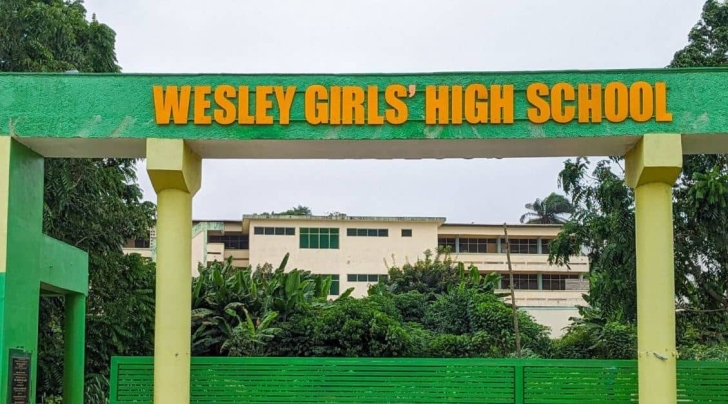
The Supreme Court of Ghana has scheduled Tuesday, April 21, 2026, for the hearing of arguments in one of the most significant religious liberty cases in recent years. The suit, filed by private legal practitioner Shafic Osman, challenges certain policies at Wesley Girls’ Senior High School (WGSHS) in Cape Coast, a prestigious Methodist-founded institution.
At the heart of the matter is whether a public-assisted mission school can compel Muslim students to participate in Christian worship services while restricting their ability to practise core aspects of Islam such as wearing the hijab, observing daily prayers, and fasting during Ramadan.
Background of the Case
Shafic Osman instituted the action under the Supreme Court’s original jurisdiction, invoking Articles 2(1)(b) and 130(1)(a) of the 1992 Constitution. He argues that the school’s policies are inconsistent with constitutional guarantees of freedom of religion, conscience, and belief (Articles 21(1)(b), (c), and 26).
- Fair Wages and Salaries Commission (FWSC) to the Independent Emoluments Commission
- Government Plans to Elevate Fair Wages and Salaries
Specific allegations include:
- Compulsory attendance at Methodist/Christian chapel services and Sunday worship.
- Restrictions on wearing the hijab as part of the school uniform.
- Prohibition or limitations on Muslim students fasting during Ramadan and performing Islamic prayers.
The plaintiff is seeking declarations that such policies violate the rights of Muslim students and wants the court to direct the Ghana Education Service (GES) to develop clear guidelines for religious accommodation in public institutions.
The suit names the Board of Governors of Wesley Girls’ SHS, the Ghana Education Service, and the Attorney-General as defendants.
Seekers Consult
Contact Us for Your Study Abroad Journey
We search for schools and check available scholarships for you
Contact: 0550414552 / 0362297079
Loan for government workers
Transcript Application
English Proficiency
Recommendation letter
Project work/thesis for undergraduate, master’s, and PhD students.
Apply for Affidavit, Gazette instantly
Passport and Visa Applications
All other Internet Services
Key Developments So Far
- In late 2025, the Supreme Court ordered the school’s Board to respond to the allegations within 14 days.
- The school has raised a preliminary objection, arguing that the Board of Directors lacks legal capacity to be sued. Instead, it contends that the proper party is the Trustees of the Methodist Church, who own the land and properties.
- The case has attracted significant interest from religious bodies. In March 2026, the Ghana Catholic Bishops’ Conference filed an amicus curiae (friend of the court) brief with supporting affidavit sworn by Most Rev. Joseph Kwaku Afrifah-Agyekum, Episcopal Chairman for Education.
Positions of Key Stakeholders
1. The Catholic Church’s Submission The Catholic Bishops argue that the Supreme Court lacks jurisdiction in this matter, stating that enforcement of fundamental human rights should begin at the High Court. They further contend that:
- Faith-based schools are not purely state institutions but are established and largely funded by churches.
- Students who voluntarily choose to attend a mission school may be deemed to have accepted its religious character and ethos.
- The church references a 2024 Memorandum of Understanding on religious tolerance in schools signed by major faith bodies.
2. Attorney-General’s Position The Attorney-General (through Deputy AG Dr. Justice Srem-Sai or earlier responses by Dr. Dominic Ayine) has defended the school’s autonomy. Key points include:
- Wesley Girls’ SHS is owned by the Methodist Church, not the state.
- The school has the right to maintain its Methodist Christian identity and doctrine.
- Receipt of government funding does not strip the school of its religious character or force it to abandon its foundational principles.
- The state cannot dictate internal religious practices of mission schools solely because of public assistance.
What This Case Really Tests
This landmark case goes beyond one school. It raises fundamental questions for Ghana’s education system:
- Where does the boundary lie between individual religious freedom and the autonomy of faith-based institutions?
- Can mission schools that receive substantial government support (salaries, infrastructure, etc.) still enforce a single religious ethos on all students?
- Should public-assisted schools be required to accommodate religious diversity, or does voluntary enrolment imply acceptance of the school’s rules?
The outcome could set a precedent for hundreds of mission schools across Ghana from Wesley Girls and Mfantsipim to Achimota, Adisadel, and many Catholic and Presbyterian institutions.
Why This Matters to Every Ghanaian
Ghana is a deeply religious but constitutionally secular state. The 1992 Constitution guarantees freedom of worship while also protecting the rights of religious bodies to propagate their faith. Mission schools have historically played a vital role in Ghana’s education producing many of the nation’s leaders but enrolment is now highly diverse.
Parents, students, educators, and religious leaders are watching closely. A ruling in favour of the plaintiff could lead to mandatory religious accommodation guidelines from GES. A ruling upholding the school’s position could reinforce the traditional character of mission schools.
What to Expect on April 21, 2026
On that date, the Supreme Court is expected to hear full arguments from the plaintiff, defendants, and possibly interested parties like the Catholic Bishops. The panel will likely address preliminary objections (jurisdiction and proper parties) before diving into the substantive constitutional issues.
The decision, whenever delivered, will be historic.
GES Shifts Teacher Recruitment to Districts: No More Centralized Postings
Seekers Consult
Contact Us for Your Study Abroad Journey
We search for schools and check available scholarships for you
Contact: 0550414552 / 0362297079
Loan for government workers
Transcript Application
English Proficiency
Recommendation letter
Project work/thesis for undergraduate, master’s, and PhD students.
Apply for Affidavit, Gazette instantly
Passport and Visa Applications
All other Internet Services
About The Author