
Supreme Court Dismisses Wesley Girls’ Objection: The Landmark Religious Discrimination Case Will Proceed
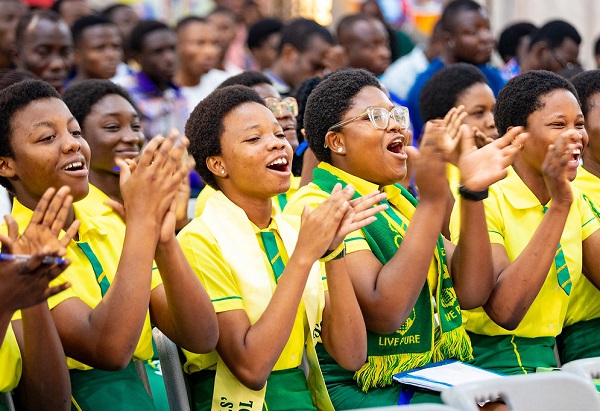
In a ruling that significantly advances a deeply sensitive constitutional conversation, Ghana’s Supreme Court has cleared the way for a lawsuit against Wesley Girls’ High School to be heard on its merits. On Tuesday, a seven-member panel of the apex court dismissed a preliminary objection filed by the school’s legal team and ruled that the substantive case on alleged religious discrimination must move forward.
- Fully Funded Study Opportunity for Ghanaians from Japanese Government (MEXT) Scholarships | 2027
- Ghana Scholarships Authority Opens Applications for 2026/2027 Local Tertiary Scholarship
- Apply now!! MTN Ghana Supports 500 Scholarships to Tertiary Education
The decision, which has captured national attention, is more than a procedural footnote it is a pivotal moment in the ongoing debate about the limits of institutional authority, the role of faith-based mission schools, and the protection of individual constitutional freedoms.
The Core of the Dispute: School Rules vs. Constitutional Rights
The legal action, a constitutional suit, fundamentally challenges certain religious directives enforced at one of Ghana’s most prestigious girls’ secondary schools. The plaintiffs argue that some school regulations unlawfully discriminate against students on the basis of their religion, thereby violating the constitutional guarantee of freedom of worship and religious practice.
While the initial report focuses on the procedural ruling, the case has its roots in years of public tension. At the heart of the matter are long-standing school rules that, according to critics, mandate participation in Christian worship services and restrict practices of students from other faiths most notably, the prohibition of Muslim students’ right to observe Islamic prayers or to fast during Ramadan within the school’s premises. The plaintiffs contend that such rules, enforced in a publicly funded mission school, directly contravene Article 21(1)(c) of the 1992 Constitution, which protects every person’s “freedom to practise any religion and to manifest such practice.”
- Fully Funded Study Opportunity for Ghanaians from Japanese Government (MEXT) Scholarships | 2027
- Ghana Scholarships Authority Opens Applications for 2026/2027 Local Tertiary Scholarship
- Apply now!! MTN Ghana Supports 500 Scholarships to Tertiary Education
The Dismissed Objection: Who Can Be Sued?
Before the court could examine these weighty questions, Wesley Girls’ High School raised a preliminary legal challenge designed to halt the lawsuit in its tracks. The school’s lawyers argued that the Board of Governors, which had been named as a defendant, lacked the legal capacity to sue or be sued. They insisted that the proper entity to be arraigned was not the Board but the Trustees of the Methodist Church Ghana, the body that formally holds and oversees the assets of the church-founded institution.
This argument was a crucial threshold issue. Had it succeeded, the suit would have been struck out on a technicality, potentially forcing the plaintiffs to refile or face an uphill jurisdictional battle. However, the Supreme Court, presided over by Chief Justice Baffoe-Bonnie, was not persuaded. In a unanimous decision, the panel upheld the submissions advanced by Deputy Attorney-General Dr Justice Srem-Sai, together with the plaintiff’s lawyer, Abdul Aziz Gomda, and ruled that the Board of Governors was indeed a competent and proper party that could validly remain a defendant in the proceedings.
The Court’s Orders and Next Steps
With the procedural obstacle removed, the Supreme Court made a decisive order to ensure the timely progress of the case: Wesley Girls’ High School, through its Board, must file its full response to the substantive allegations of religious discrimination within two weeks. Following that, the case has been adjourned indefinitely a standard practice to allow the substantive hearing timetable to be fixed once pleadings have closed.
This means the merits of the case whether the school’s religious rules are unconstitutional will shortly be ventilated in open court. The apex court has effectively placed a national spotlight on how Ghana balances the historical autonomy of mission schools with the indivisible rights of every citizen.
A Wider National Conversation
The public interest in this lawsuit extends far beyond the walls of the Cape Coast institution. The case is emblematic of a broader friction felt across many legacy mission schools in Ghana, where decades-old traditions rooted in particular Christian denominations sometimes sit uncomfortably alongside a modern, religiously diverse student body. Recent years have seen similar complaints from Muslim students and parents at other faith-based senior high schools, sparking interventions from the Ghana Education Service and civil society.
The Supreme Court’s eventual judgment is therefore expected to set a binding constitutional precedent. It will test fundamental principles: Can a public or publicly-subsidized school compel religious observance? What is the scope of the right to manifest one’s religion under the 1992 Constitution? And where does the institutional character of a school end and individual liberty begin?
The bench that will answer these questions comprises some of the nation’s most experienced justices, including Gabriel Scott Pwamang, Senyo Dzamefe, Kwaku Tawiah Ackaah-Boafo, Issifu Omoro Tanko Amadu, Richard Adjei-Frimpong, and Sir Dennis Dominic Adjei, under the leadership of the Chief Justice.
Conclusion
The Supreme Court’s dismissal of Wesley Girls’ objection is a clear signal that constitutional matters concerning fundamental human rights cannot be evaded on technical grounds. For the students, parents, and advocacy groups who have long pushed for reform, the ruling is a victory for access to justice. For the school and similar institutions, it is a summons to engage in a long-overdue judicial clarification of their regulatory powers.
The eyes of the nation are now on the substantive hearing to come, in what promises to be one of the most significant constitutional conversations in Ghana in years. The outcome will not only determine the fate of specific school rules but will also shape the landscape of religious liberty in Ghana’s educational system for a generation.
- Fully Funded Study Opportunity for Ghanaians from Japanese Government (MEXT) Scholarships | 2027
- Ghana Scholarships Authority Opens Applications for 2026/2027 Local Tertiary Scholarship
- Apply now!! MTN Ghana Supports 500 Scholarships to Tertiary Education
About The Author