
Haruna Iddrisu vows to increase teacher recruitment numbers
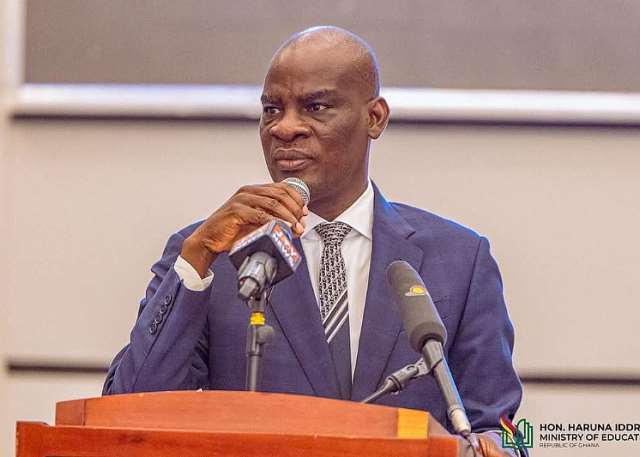
Table of Contents
ToggleHaruna Iddrisu Vows to Hike Teacher Recruitment Numbers: What the 2026 Pledge Means for Trained Graduates
In a significant policy shift that has been welcomed by frustrated teaching graduates and their unions, the Minister for Education, Haruna Iddrisu, has publicly pledged to push for an increase in the number of teachers recruited into the Ghana Education Service (GES) for the 2026 academic year. The minister’s vow, made on the sidelines of the 2026 May Day celebrations in Kumasi on Friday, 1st May, comes as a direct response to mounting pressure from the Ghana National Association of Teachers (GNAT) and other sister unions, who have branded the initially announced quota of 7,000 slots as grossly inadequate.

The Genesis of the Discontent: A 7,000 Quota in a Sea of 10,000+ Graduates
The furore began when the government, through the Ministry of Finance and the GES, released the recruitment ceiling for the education sector. The initial allocation of 7,000 slots for the year was met with immediate and widespread dissatisfaction. Unions and education advocates pointed to a staggering mismatch: the allocation falls far short of absorbing the over 10,000 trained graduates currently on waitlists after completing their studies at the nation’s various Colleges of Education and tertiary institutions.
According to GNAT and other stakeholders, this backlog represents not just numbers, but a crisis of expectation and a waste of public investment in training. Many of these qualified teachers have been waiting for their postings for years, surviving on the hope of being integrated into the service. The initial cap of 7,000 meant that thousands of fully prepared, licensed educators would remain idle while schools across the country grapple with persistent teacher shortages, especially in rural and underserved areas.
The Minister’s Intervention: “The 7,000 Is Not Enough”
It was against this backdrop of growing frustration that Minister Haruna Iddrisu seized the opportunity of the May Day platform to address the storm. His concession was both frank and emphatic:
“The 7,000 is not enough, particularly where health workers had 15,000 and others. There are more schools than hospitals, so government will work and up the numbers.”
The minister’s statement, reported widely on 1st May 2026, directly acknowledged the glaring disparity between sectors. By pointing to the health sector’s 15,000 recruitment slots as a benchmark, Iddrisu applied a simple but powerful arithmetic: the sheer volume of educational infrastructure across Ghana thousands of basic and second-cycle institutions spread across 16 regions—logically demands a workforce that far exceeds the quota. His “more schools than hospitals” logic is not merely rhetorical; it reflects a deep-seated imbalance in public service human resource planning.
Education remains Ghana’s largest public sector employer. With over 25,000 basic schools and hundreds of senior high schools, the demand for qualified instructors naturally outstrips that of a health sector that, while critical, is concentrated in fewer, though obviously vital, facilities. The minister’s concession indicates a government that is, at last, ready to recalibrate recruitment numbers to reflect this structural reality.
Government’s Commitment: A Review Promised
Iddrisu did not stop at lamenting the inadequacy. He gave firm assurances that high-level consultations are already underway to adjust the figures upward to better reflect “national needs” and the actual stock of trained graduates ready for posting. While he stopped short of providing a new concrete figure, the language was unambiguous: the government is not deaf to the cries of the teacher unions.
This commitment is expected to bring immense relief to the thousands of graduates who have been forced to subsist on ad-hoc arrangements, private tutoring, and in some cases, provide unpaid labour in private schools while awaiting government posting. The minister’s intervention signals a political will to align recruitment with the physical number of schools and to tackle the teacher-to-pupil ratio, which in many overcrowded urban classrooms and understaffed rural schools, has become a barrier to quality learning.
The Bigger Picture: Quality Education Beyond Numbers
Beyond the immediate relief for unemployed graduates, a higher recruitment intake has profound implications for the quality of education. A chronic shortage of teachers leads to oversized classes, overburdened educators, and compromised instruction. If the government succeeds in raising the numbers significantly, it could mean:
-
Improved learning outcomes: Smaller class sizes and full curriculum coverage become possible.
-
Reduced attrition: Freshly posted teachers can be deployed to underserved areas, addressing the perennial “deficit” areas in subjects like Mathematics, Science, and ICT.
-
Mopping up of the “license to teach” backlog: Many teachers holding the new professional license but without postings would finally be activated.
-
Economic boost: Absorbing these graduates onto the government payroll injects direct income into local economies, particularly in the districts where they will be posted.
However, the minister’s promise will have to be backed by the Ministry of Finance. The real test will be whether the supplementary budget or the financial clearance is granted to convert the 7,000 into, say, 12,000 or 15,000. Teacher unions are understandably watching closely, and GNAT has already indicated that it will not relent until a formal and revised figure is gazetted.
A Look Back: The Cycle of Recruitment Backlogs
The 2026 situation is not an anomaly. Ghana’s teacher recruitment has for years been characterised by a painful cycle: large cohorts of graduates are churned out by 46 public Colleges of Education and several universities, only to be met with fiscal ceilings that absorb only a fraction. In 2024, for example, only about 4,500 teachers were recruited, leaving a huge backlog. The year 2025 saw a slight increase, but the structural gap persisted.
The perennial excuse has been the high wage bill and IMF conditionalities limiting net hiring. By 2026, with the country’s economic outlook marginally improved and elections approaching, the political calculus appears to be shifting. The government’s newfound readiness to “up the numbers” is likely a blend of genuine need and an acknowledgment of the voting power of the teaching community and their families.
What Next? Awaiting the Revised Figures
Minister Haruna Iddrisu has promised action, not just words. The coming weeks will reveal whether the consultations yield a revised, higher quota that can substantially clear the backlog. For the over 10,000 trained and waiting teachers, the hope is that this is not merely a May Day goodwill message but a concrete precursor to their long-awaited appointment letters.
In the meantime, the message from the May Day gathering in Kumasi is clear: the education sector’s numbers will be reviewed, and the government has publicly committed to according teachers the numerical recognition that their critical role deserves. As the unions continue to press their case, all eyes are now on the Ministry of Finance to translate the minister’s vow into a budget line that truly leaves no classroom without a professional instructor.