
Education Minister Haruna Iddrisu Directs GES to Reserve Recruitment Quota for Persons with Disabilities
In a landmark directive that promises to reshape Ghana’s teaching workforce, Education Minister Haruna Iddrisu has ordered the Ghana Education Service (GES) to allocate a specific percentage of its teacher recruitment slots to persons living with disabilities (PWDs).
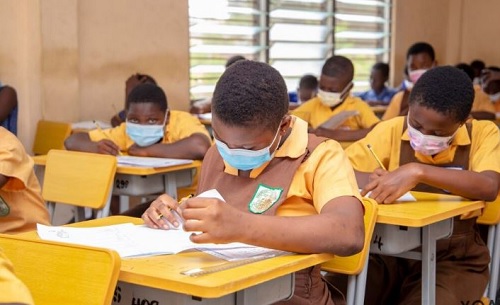
The Minister issued the directive on Monday, 4th May 2026, during a visit to the Boako M/A Basic School examination centre in the Western North Region, where he was monitoring the ongoing Basic Education Certificate Examination (BECE). The move marks a decisive shift from mere inclusion rhetoric to enforceable policy within the education sector.
The Directive: What the Minister Said
Addressing the leadership of the GES, Mr Iddrisu was unequivocal. He stated that a deliberate quota must be established in all upcoming teacher recruitment cohorts.
“So, Director General, you are accordingly directed that you must allocate a certain percentage of your recruitment to teachers with disability in your cohort,” the Minister said.
He emphasized that the sector must create deliberate room for qualified teachers with disabilities. “We must have room to respond to that,” he added, suggesting that this should not be a one-off gesture but an institutionalized practice.
The Inspiration: A Lesson Learned on May Day
Interestingly, the Minister revealed that his directive was prompted by recent public advocacy and personal reflection, not by a formal policy paper. He recounted three lessons he learned on May Day that crystallized the need for action:
-
GRIDCo’s Safety Message: Placards displayed by the Ghana Grid Company Limited (GRIDCo) which focused on workplace safety educated him on the importance of protective and inclusive environments.
-
A Reminder from Kumasi: He read a powerful message from a campaign in Kumasi stating, “Blind teachers are also teachers.” This simple yet profound statement served as a direct reminder that physical impairment does not diminish pedagogical ability or the right to employment.
-
The Need for Action: These messages converged to convince him that the education sector could no longer overlook qualified PWDs in its hiring processes.
This candid admission highlights the power of advocacy and public messaging in influencing high-level policy decisions.
Beyond Recruitment: The Teacher Allowances Issue
During the same engagement, Mr Iddrisu touched on a second burning issue affecting teacher welfare. He acknowledged that many teachers are owed significant arrears in allowances, including:
-
Car maintenance allowance
-
Transfer allowance
-
Promotion allowance
The Minister gave an assurance that he would escalate the matter to the Minister for Finance to explore possible solutions. This dual announcement pushing for inclusive hiring while pledging to clear outstanding debts paints a picture of an administration trying to address both systemic inequity and immediate economic hardship within the teaching profession.
The Bigger Picture: Why This Directive Matters
This is not just administrative housekeeping; it is a potential turning point for inclusive education in Ghana for several reasons:
1. Tackling Employment Discrimination
Qualified PWDs in Ghana face disproportionately high rates of unemployment, not because of a lack of capability, but because of societal barriers and employer prejudice. A reserved quota in the GES, the nation’s largest single employer of graduates, directly confronts this structural discrimination. It also sends a powerful message to students with disabilities in our schools: that their future can include a professional career in education.
2. Enhancing Inclusive Education Delivery
Teachers with disabilities bring invaluable lived experience to the classroom. A visually impaired teacher, for example, can be a powerful role model for a sighted or non-sighted student struggling with confidence. Their presence normalizes disability and strengthens the delivery of truly inclusive education, a policy the Ministry has long championed on paper.
3. Legal and Policy Alignment
The directive is entirely consistent with Section 41 of the Persons with Disability Act, 2006 (Act 715), which mandates that every government ministry, department, and public corporation reserve not less than one percent of its recruitment for persons with disabilities. The Minister’s action is effectively a political enforcement of a legal requirement that has seen poor compliance across the public sector.
What Must Happen Next
For this directive to translate into real jobs, the GES and the Ministry of Education must now work out the following logistical details:
-
The Exact Quota: What specific percentage of each recruitment cohort will be reserved? Will it be the one percent baseline, or a larger, more ambitious figure?
-
Review of Recruitment Entry Requirements: Some physical requirements in the GES recruitment process may need to be reviewed to ensure they do not unintentionally screen out capable PWDs.
-
Workplace Accommodations: Schools will need support to provide reasonable accommodations, such as accessible infrastructure and assistive technology, to ensure recruited teachers can perform their roles effectively.
-
Stakeholder Collaboration: Working closely with organizations like the Ghana Federation of Disability Organizations (GFDO) and the National Council on Persons with Disability will be crucial to get the implementation right.
A Defining Moment for Educational Leadership
The beauty of Mr Iddrisu’s directive lies in its simplicity and its source. It was not a mandate hidden in a voluminous report; it was a direct, public instruction inspired by the advocacy of PWDs themselves. The Minister heard the message “Blind teachers are also teachers”and acted.
If implemented faithfully, this recruitment quota will enrich Ghana’s schools with dedicated professionals while affirming the fundamental principle that the right to work and contribute to national development belongs to every qualified Ghanaian, irrespective of disability.
About The Author