
Mahama’s Pledge to Teachers: Reviewing Single Spine Pay and Pensions.
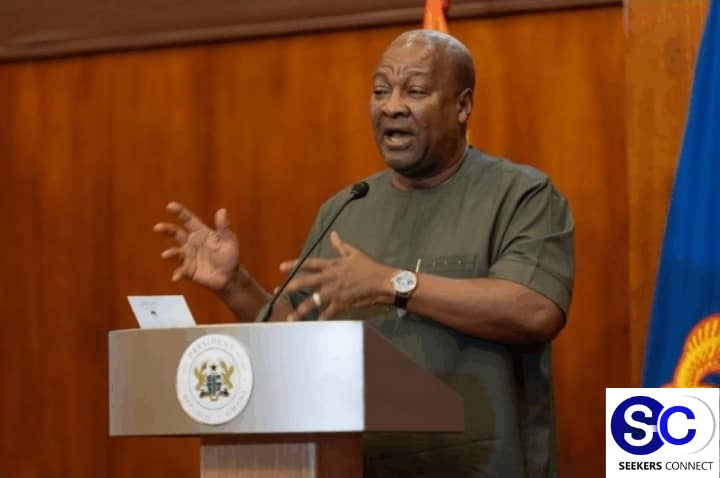
In a move that’s sparking hope among Ghanaian Teachers, President John Dramani Mahama has promised a thorough review of the Single Spine Pay Policy and the three-tier pension scheme. This assurance comes at a critical time when teachers are voicing frustrations over inadequate compensation, funding shortages, and safety concerns. Delivered during the 54th National Delegates Conference of the Ghana National Association of Teachers (GNAT) at the University of Professional Studies, Accra (UPSA), Mahama’s remarks signal a potential shift toward better welfare for those shaping the nation’s future. As Ghana navigates economic challenges in 2026, this could be a pivotal step in resetting the education landscape.
Follow us on WhatsApp for more updates: CLICK HERE
Seekers Consult
Contact Us for Your Study Abroad Journey
We search for schools and check available scholarships for you
Contact: 0550414552 / 0362297079
Loan for government workers
Transcript Application
English Proficiency
Recommendation letter
Project work/thesis for undergraduate, master’s, and PhD students.
Apply for Affidavit, Gazette instantly
Passport and Visa Applications
All other Internet Services
The Conference: A Platform for Urgent Dialogue
The 54th GNAT National Delegates Conference, held on January 5, 2026, brought together educators, union leaders, and government officials to discuss the state of teaching in Ghana. GNAT President Reverend Isaac Owusu set a serious tone, highlighting the “unparalleled dedication” of teachers while pointing out systemic issues that leave them “underappreciated and overburdened.” He stressed that despite their role as the backbone of the education system, many struggle with salaries that don’t match their efforts.
Rev. Owusu outlined four key demands:
- Review of the Single Spine Pay Policy: To address inequities in salary structures.
- Adequate Funding for Basic Education: Ensuring resources reach the grassroots level.
- Pension Reform: Tackling the three-tier scheme’s shortcomings, where teachers reportedly can’t boast of even GHS 500,000 in lump sums upon retirement.
- Teacher Safety: Implementing protections against assaults, with a zero-tolerance stance that could lead to school closures if incidents persist.
He warned, “This year, 2026, we are declaring zero tolerance for teacher assault and brutality. Should any individual or group attack any teacher in Ghana without cause, we shall invoke the spirit and solidarity of ‘touch one, touch all.’ If we have to close down schools, we will close down schools.” This call resonates amid reports of over 6,000 teachers threatening legal action over unpaid arrears, underscoring the urgency.
President Mahama’s Response: Promises of Reform
Responding directly, President Mahama acknowledged the flaws in the current systems. He described the Single Spine Pay Policy as “very crooked” and pledged a comprehensive review, noting that the Trades Union Congress (TUC) had raised similar concerns. “Everybody is unhappy with the spine, and so of course the TUC raised it with us and asked if we could look at the whole salary structure again. We’re very willing to do that so that we are able to remunerate people better and enable them to give their best in their roles,” he said.
On pensions, Mahama committed to forming a working team to overhaul the three-tier scheme, ensuring workers feel secure in retirement. He also stood firmly against assaults on teachers, assuring GNAT, “As for assault on teachers, I am with you one hundred percent. We will deal with it.”
This isn’t Mahama’s first engagement with education reforms. Recent actions, like attributing poor 2025 WASSCE results to neglect in basic education and directing the Ministry of Education to implement urgent changes, show a broader commitment to the sector.
Background: The Single Spine and Pension Challenges
Introduced in 2010, the Single Spine Pay Policy aimed to standardize public sector salaries and reduce disparities. However, over the years, it has faced criticism for creating inequities, with some workers feeling undervalued. In 2025, organized labor negotiated a 9% base pay increase for 2026, but unions rejected it as inadequate amid economic instability. Teachers, in particular, have highlighted how inflation erodes their earnings, with calls for a 60% hike unmet.
The three-tier pension scheme, meant to provide better retirement security, has also fallen short. GNAT’s Rev. Owusu noted that many retirees receive meager lump sums, far below expectations. This ties into broader issues like unpaid salary arrears, with the government promising clearances in the 2026 budget.
Social media echoes these sentiments, with posts praising Mahama’s transparency in education probes and calls for accountability.
Here’s a quick comparison of recent salary negotiations:
| Year | Proposed Increase | Outcome | Key Demands |
|---|---|---|---|
| 2025 | 60% by labor | Rejected; 9% agreed | Compensation for economic instability |
| 2026 | 9% base pay | Implemented, but criticized | Review of entire structure |
Implications: A Reset for Ghana’s Education?
Mahama’s pledges could lead to meaningful reforms, boosting teacher morale and retention. Improved pay and pensions might attract more talent to the profession, ultimately benefiting students especially after the 2025 WASSCE setbacks. However, implementation will be key, given past promises and economic constraints like IMF conditions.
For teachers, this means potential financial security and safer environments. Broader society could see a stronger education system, with Mahama’s “reset agenda” extending to digitalizing schools and ensuring quality learning. Yet, critics urge vigilance, measuring success against budgets and actions.
Looking Forward
President Mahama’s assurances at the GNAT conference mark a promising start to 2026 for Ghana’s teachers. By addressing pay inequities, pension flaws, and safety, his administration could foster a more equitable education sector. As Rev. Owusu aptly put it, confronting these challenges head-on is essential for progress.
Educators and stakeholders will watch closely for the formation of review teams and tangible outcomes. In the meantime, this dialogue reinforces the vital role of teachers and the need for policies that truly value them.
Follow us on WhatsApp for more updates: CLICK HERE
Seekers Consult
Contact Us for Your Study Abroad Journey
We search for schools and check available scholarships for you
Contact: 0550414552 / 0362297079
Loan for government workers
Transcript Application
English Proficiency
Recommendation letter
Project work/thesis for undergraduate, master’s, and PhD students.
Apply for Affidavit, Gazette instantly
Passport and Visa Applications
All other Internet Services
About The Author