
Complete Guide to Student & Exchange Visas 2026: F-1, J-1 & M-1 Visas
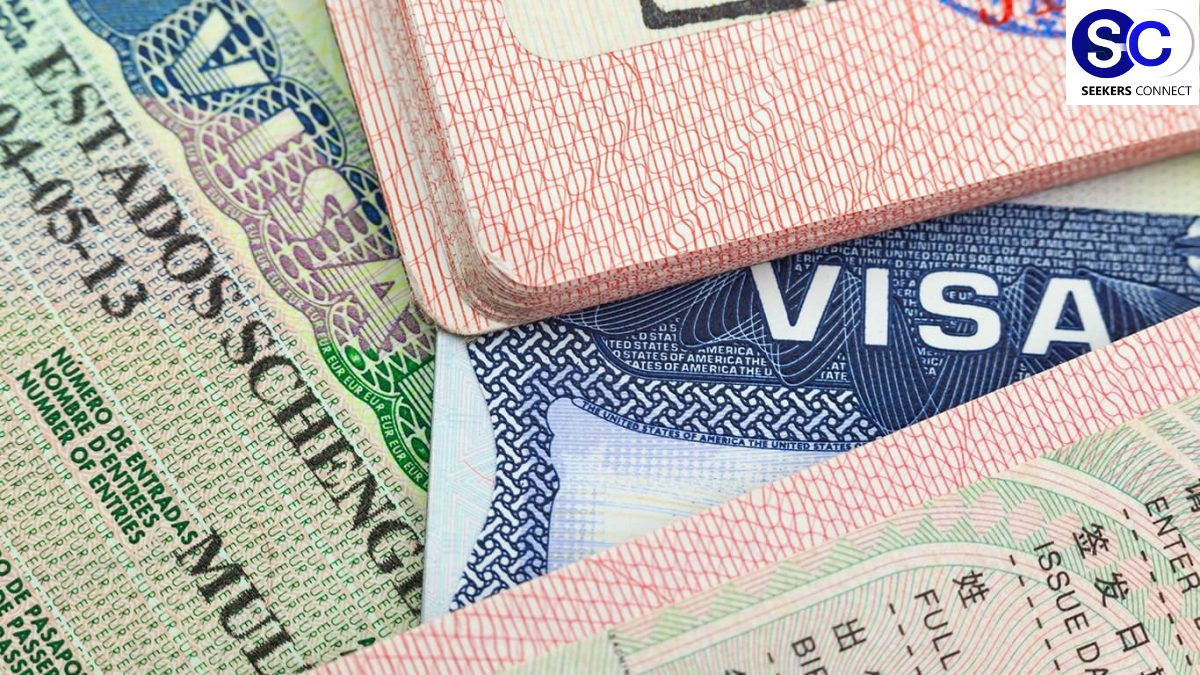
Planning to study in the United States in 2026? Understanding the right visa is one of the most important steps in your journey. The F-1, J-1, and M-1 visas are the three main non-immigrant visas for international students and exchange visitors.
India Offers Fully Funded ICCR Scholarships to Ghanaian Students for 2026–2027
Follow us on WhatsApp for more updates: CLICK HERE
Seekers Consult
Contact Us for Your Study Abroad Journey
We search for schools and check available scholarships for you
Contact: 0550414552 / 0362297079
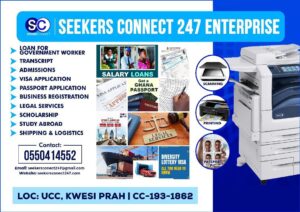
Loan for government workers
Transcript Application
English Proficiency
Recommendation letter
Project work/thesis for undergraduate, master’s, and PhD students.
Apply for Affidavit, Gazette instantly
Passport and Visa Applications
All other Internet Services
1. F-1 Student Visa – The Most Popular Academic Visa
What it is The F-1 visa is for students pursuing full-time academic studies (degree programmes, language training, or vocational programmes that lead to a degree) at SEVP-certified schools, colleges, or universities.
Who can apply?
- Students accepted into a full-time academic programme at an SEVP-certified institution.
- Must intend to return to their home country after studies (non-immigrant intent).
- Ghanaian and other international students are eligible once admitted.
Documents Needed
- Valid passport (at least 6 months validity beyond your stay).
- DS-160 confirmation page.
- Form I-20 (issued by your school after SEVIS registration).
- SEVIS I-901 fee receipt
- Visa application fee receipt.
- Recent passport photo.
- Academic transcripts, diplomas, and test scores (TOEFL/IELTS, SAT/GRE if required).
- Financial proof (bank statements, scholarship letters, sponsor affidavits).
- Evidence of ties to Ghana (family, property, job offer letter, etc.).
ERASMUS MUNDUS CLMCE give away Scholarship for 2026 – Fully Funded
How to Apply
- Receive Form I-20 from your SEVP-certified school.
- Pay the SEVIS fee at fmjfee.com.
- Complete the DS-160 online at ceac.state.gov.
- Pay the visa fee and schedule an interview at your nearest U.S. Embassy/Consulate.
- Attend the interview with all documents.
Direct Application Link:
- DS-160 Form → https://ceac.state.gov/genniv/
- Official Student Visa Page → https://travel.state.gov/content/travel/en/us-visas/study/student-visa.html
Dos and Don’ts Dos:
- Be honest and confident.
- Bring originals + copies.
- Show strong ties to Ghana.
- Practice explaining your study plan clearly.
Don’ts:
- Do not say you plan to stay in the U.S. permanently.
- Avoid vague or contradictory answers.
- Never bring family members into the interview room.
Common Interview Questions
- Why did you choose this university and programme?
- How will you fund your studies?
- What are your plans after graduation?
- Why do you want to study in the U.S. instead of Ghana?
- How will this degree help you in Ghana?
FAQ Q: Can I work on an F-1 visa? A: On-campus work is allowed; off-campus requires CPT or OPT approval.
Q: How long can I stay? A: Duration of study + 60-day grace period (plus OPT if eligible).
2. J-1 Exchange Visitor Visa – For Cultural & Professional Exchange
What it is The J-1 visa is for participants in U.S. Department of State-approved exchange programmes (students, scholars, interns, trainees, au pairs, researchers, etc.). It promotes cultural exchange.
Who can apply?
- Anyone accepted into a designated J-1 exchange programme (e.g., university exchange, research, internship, or cultural programme).
- Must intend to return home after the programme.
Follow us on WhatsApp for more updates: CLICK HERE
Seekers Consult
Contact Us for Your Study Abroad Journey
We search for schools and check available scholarships for you
Contact: 0550414552 / 0362297079
Loan for government workers
Transcript Application
English Proficiency
Recommendation letter
Project work/thesis for undergraduate, master’s, and PhD students.
Apply for Affidavit, Gazette instantly
Passport and Visa Applications
All other Internet Services
Documents Needed
- Valid passport.
- DS-160 confirmation page.
- Form DS-2019 (issued by your J-1 sponsor).
- DS-7002 (Training/Internship Placement Plan – for interns/trainees).
- SEVIS fee receipt
- Visa fee receipt.
- Passport photo.
- Proof of financial support (if not covered by sponsor).
- Evidence of ties to home country.
How to Apply
- Get accepted into a J-1 sponsor programme.
- Receive DS-2019.
- Pay SEVIS fee.
- Complete DS-160 and schedule interview.
- Attend the visa interview.
Direct Application Link:
- DS-160 → https://ceac.state.gov/genniv/
- Official J-1 Page → https://j1visa.state.gov/
- Programme Search → https://j1visa.state.gov/programs
Dos and Don’ts Dos:
- Clearly explain your exchange programme goals.
- Show cultural exchange intent.
- Bring all sponsor documents.
Don’ts:
- Do not hide any previous U.S. visa history.
- Avoid implying permanent stay.
Common Interview Questions
- What is the purpose of your exchange programme?
- Who is your sponsor?
- What will you do after the programme ends?
- How does this exchange benefit both countries?
FAQ Q: Is there a 2-year home residency requirement? A: Yes, for some J-1 categories check your DS-2019.
3. M-1 Student Visa – For Vocational & Non-Academic Studies
What it is The M-1 visa is for students enrolled in vocational or non-academic programmes (technical, vocational, or other non-degree training) at SEVP-certified schools.
Who can apply?
- Students accepted into full-time vocational programmes (e.g., flight school, cosmetology, culinary arts, technical training).
- Must prove intent to return home after studies.
Documents Needed
- Valid passport.
- DS-160 confirmation page.
- Form I-20 (M-1 version).
- SEVIS fee receipt
- Visa fee receipt.
- Academic transcripts and proof of English proficiency.
- Financial proof.
- Evidence of ties to home country.
How to Apply Same process as F-1: I-20 → SEVIS fee → DS-160 → interview.
Direct Application Link: Same as F-1 → https://travel.state.gov/content/travel/en/us-visas/study/student-visa.html
Dos and Don’ts Dos:
- Emphasise vocational training goals.
- Show strong home ties.
Don’ts:
- Do not plan to change to academic study without proper approval.
- M-1 students have stricter work limitations.
Common Interview Questions
- Why did you choose this vocational programme?
- How will this training help your career in Ghana?
- What are your plans after completing the course?
FAQ Q: Can M-1 students work? A: Limited practical training only after completion no on-campus work during studies.
Full Sail University is offering scholarship for 2026
Follow us on WhatsApp for more updates: CLICK HERE
Seekers Consult
Contact Us for Your Study Abroad Journey
We search for schools and check available scholarships for you
Contact: 0550414552 / 0362297079
Loan for government workers
Transcript Application
English Proficiency
Recommendation letter
Project work/thesis for undergraduate, master’s, and PhD students.
Apply for Affidavit, Gazette instantly
Passport and Visa Applications
All other Internet Services
About The Author