
Russia Doubles Scholarships for Ghanaian Students to 240
Ghanaian students seeking international educational opportunities have received a major boost as Russia has doubled its annual government scholarship allocation for Ghana from 120 to 240 places.
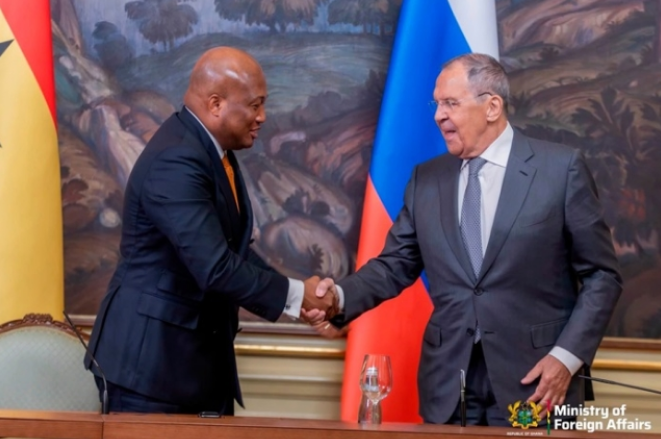
The increase was announced by Ghana’s Minister for Foreign Affairs, Samuel Okudzeto Ablakwa, following a three-day official visit to Moscow at the invitation of his Russian counterpart, Sergey Lavrov.
The new arrangement is expected to create more opportunities for Ghanaian students to pursue higher education in Russian universities, particularly in areas considered important to Ghana’s future economic and technological development.
Russia doubles Ghana’s scholarship allocation
Under the new arrangement, the number of annual Russian government scholarships available to Ghanaian students has increased from 120 to 240.
The latest increase comes shortly after the Russian Embassy in Ghana confirmed that 120 government-funded scholarship places had been allocated to Ghana for the 2026/2027 academic year.
The latest decision therefore represents a doubling of the allocation and significantly expands the number of Ghanaian students who could benefit from government-supported studies in Russia.
The development also builds on Russia’s previous increases in scholarship opportunities for Ghana. In 2022, Russia increased its annual scholarship allocation from 75 to 110 places, following a request made by then-President Nana Addo Dankwa Akufo-Addo. At the time, the scholarships were intended particularly for students pursuing Medicine and Engineering in Russian universities.
Which courses will receive priority?
One of the most significant aspects of the new scholarship arrangement is the focus on fields that are considered strategically important.
According to the announcement, priority will be given to students pursuing programmes in:
- Artificial Intelligence (AI)
- Engineering
- Petroleum Sciences
- Pharmaceuticals
The emphasis on these disciplines reflects the growing importance of technology, engineering, energy and healthcare to Ghana’s development agenda.
For students interested in these fields, the expanded allocation could provide an opportunity to gain specialised knowledge and professional training in Russian higher education institutions.
Why the scholarship increase matters
The expansion comes at a time when Ghana is seeking to strengthen its human capital and develop a workforce capable of supporting emerging sectors of the economy.
Increasing the number of scholarships from 120 to 240 effectively means that, under the new annual allocation, an additional 120 Ghanaian students could potentially benefit each year compared with the previous quota.
This is particularly significant for students interested in highly specialised areas such as artificial intelligence, engineering, petroleum-related disciplines and pharmaceutical sciences.
Beyond the individual beneficiaries, the programme has the potential to contribute to Ghana’s broader human-capital development if graduates return with skills that can be applied in Ghanaian institutions, industries and research environments.
Russia’s ambassador to Ghana, Andrei Ordash, previously said that more than 600 Ghanaian students were studying in Russia, while describing education as a longstanding pillar of Ghana-Russia relations. He also said Russia planned to expand scholarships, Russian-language programmes, youth exchanges and academic contacts.
A long history of Ghana-Russia educational cooperation
Educational cooperation between Ghana and Russia is not new.
For decades, Ghanaian students have travelled to the former Soviet Union and later Russia for higher education and professional training. The Russian Embassy has described graduates of Soviet and Russian universities as an important link between the two countries.
In July 2026, Ambassador Ordash said thousands of Ghanaians had studied in the former Soviet Union and Russia, describing them as a “living bridge” between the two countries.
The relationship is now expanding beyond traditional scholarship arrangements, with Russian and Ghanaian institutions developing direct academic partnerships.
For example, Takoradi Technical University (TTU) has become the first Ghanaian institution to join the Russian-African Network University, creating opportunities for academic exchanges, joint research and summer schools.
Russia and Ghana expand university partnerships
The scholarship expansion is part of a broader effort to deepen educational cooperation.
According to the Russian Embassy, Russian universities are developing direct partnerships with Ghanaian higher education institutions to promote:
- Student mobility
- Research collaboration
- Knowledge sharing
- Academic exchanges
- Technical education
- Innovation
There is also cooperation in agricultural education and technology. Russia’s Kuban State Agrarian University, for instance, has been collaborating with Ghanaian institutions in agricultural education and the introduction of innovative farming technologies.
Such partnerships could give Ghanaian students opportunities beyond traditional classroom-based study by connecting them with international research, technology and academic networks.
Artificial intelligence becomes a major area of cooperation
The decision to prioritise Artificial Intelligence is particularly notable.
AI is increasingly influencing education, healthcare, agriculture, financial services, cybersecurity, manufacturing and other sectors. For Ghana, building a workforce with advanced digital and technological capabilities could become increasingly important as the country seeks to modernise its economy.
By including AI among the priority areas for the expanded scholarship allocation, the programme aligns international education opportunities with a rapidly developing field.
Students who specialise in AI could potentially contribute to areas such as software development, data analysis, automation, digital services and technological innovation after completing their studies.
Engineering and energy remain strategic priorities
Engineering is another major priority under the new arrangement.
Ghana continues to require skilled professionals in areas such as infrastructure, energy, manufacturing, mining and technology. International training in engineering can therefore contribute to the development of specialised human capital.
The scholarship expansion also comes alongside deeper Ghana-Russia discussions on energy cooperation, particularly Ghana’s plans to develop nuclear power as part of its long-term energy strategy.
According to Graphic Online, Ghana and Russia agreed to deepen cooperation in Ghana’s peaceful nuclear energy programme and green-transition objectives. Ghana has a plan to add 700 megawatts of nuclear power to its energy mix.
Ghana-Russia nuclear cooperation
Education is only one component of the renewed Ghana-Russia engagement.
The two countries are also strengthening cooperation in peaceful nuclear energy.
Ghana and Russia previously signed an agreement in 2015 on cooperation in the peaceful use of atomic energy. Russia’s state nuclear company, Rosatom, has subsequently been shortlisted among five companies competing for Ghana’s first nuclear power plant project.
The other shortlisted companies are from France, the United States, China and South Korea.
A more recent memorandum of understanding between the Ghana Atomic Energy Commission and Rosatom has also strengthened cooperation between the two sides.
This wider cooperation helps explain why engineering, energy-related knowledge and technical expertise are increasingly important areas in Ghana-Russia relations.
Cooperation extends beyond scholarships
The latest scholarship announcement forms part of a wider diplomatic effort between Ghana and Russia.
The two countries have expressed interest in cooperation in areas including:
- Education
- Technology
- Energy
- Agriculture
- Research
- Innovation
- Youth exchanges
- Culture
- Climate-related issues
Ghana and Russia have also agreed to work together on international issues, including counterterrorism, climate change and reform of the United Nations.
The broader relationship therefore extends well beyond students travelling to Russia for university education.
What this means for Ghanaian students
For Ghanaian students, the most immediate significance is the expansion of available government-funded opportunities.
The increase from 120 to 240 scholarships provides a larger pool of opportunities, especially for students whose academic interests align with the priority fields.
However, prospective applicants should distinguish between the announcement of an increased scholarship allocation and an official call for applications.
The Ghana Scholarships Authority operates an official online application system that includes Russian Government Scholarships among its scholarship partners. Applicants should rely on official announcements for eligibility requirements, application periods, documentation and selection procedures rather than unofficial social media posts or intermediaries.
Students should watch official channels
Scholarship opportunities can involve specific eligibility requirements, deadlines, academic qualifications and document requirements.
Students interested in the Russian government scholarship should therefore monitor official updates from the Ghana Scholarships Authority, relevant government institutions and the Russian Embassy in Ghana.
The Ghana Scholarships Authority specifically advises applicants to use official channels and warns against individuals or organisations claiming to guarantee scholarship placement.
Students should also avoid paying individuals who claim to have special access to scholarship selection.
A significant step in human-capital development
The doubling of Russia’s scholarship allocation represents a significant development in Ghana’s international education opportunities.
Moving from 120 to 240 places means a substantially larger number of Ghanaian students could gain access to higher education and specialised training in Russia each year.
The decision is also notable because it places strong emphasis on fields that are increasingly relevant to Ghana’s development priorities, including AI, engineering, petroleum sciences and pharmaceuticals.
At the same time, the scholarship expansion forms part of a much broader Ghana-Russia relationship involving academic partnerships, research, technology, energy and youth exchanges.
About The Author